
Some links on this page are affiliate links. If you click through and make a purchase, we may earn a small commission at no extra cost to you. This helps us maintain and improve this independent guide. Learn more.
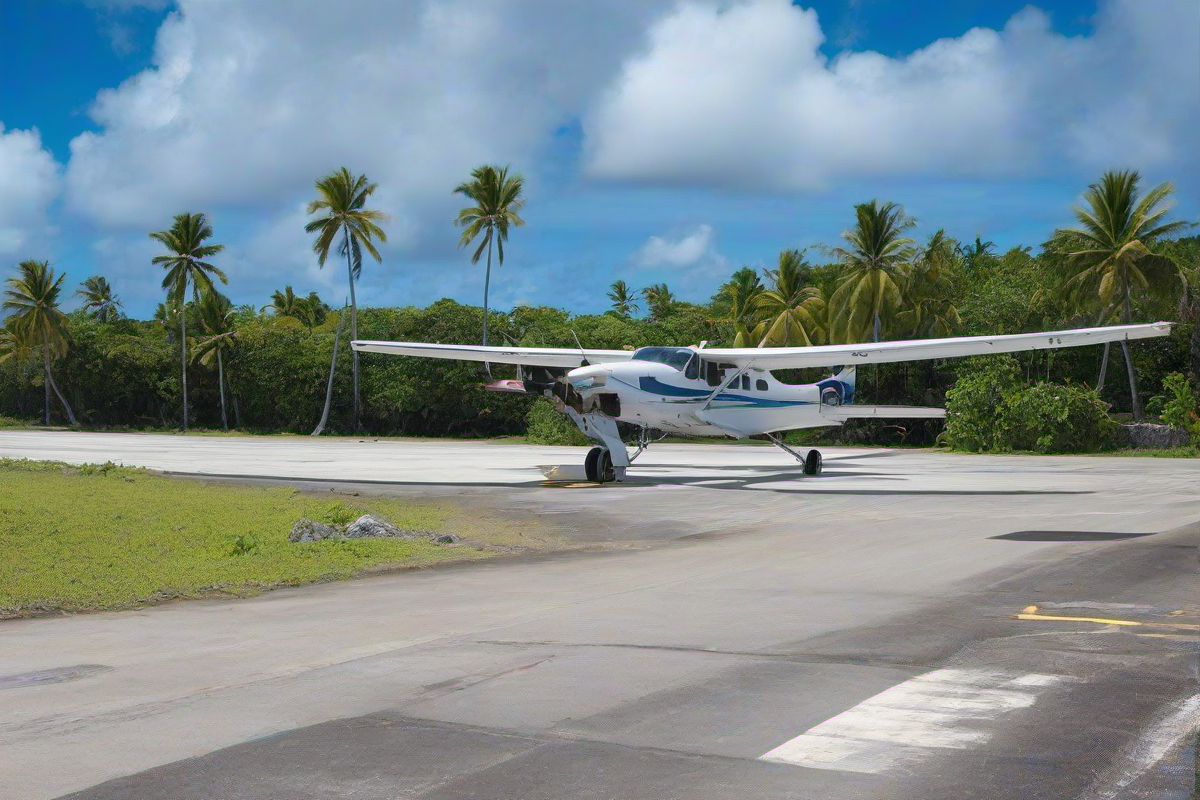
Nauru is one of the most remote countries on earth, and getting there requires planning. Once you arrive, getting around the island is relatively straightforward — but options are limited.
✈️ Fly in, fly out
Nauru Airlines operates flights from Brisbane (4 hrs) and Nadi/Fiji (3 hrs). No passenger ferries or cruise ships call here.
🚗 Rent a car
No public transport. Car hire ($50–80 AUD/day) is the best way to explore. Drive on the left — Australian system.
🌴 Island is 19 km around
The ring road circles the entire island. Walking takes 4–5 hours. Bicycles available at some hotels — perfect for exploring.
⚠️ Plan before arrival
No ride-hailing apps, no taxi dispatch. Arrange airport pickup or car hire in advance through your hotel.
Getting There — Flights
Nauru International Airport (INU) is the only airport on the island. It is served by regularly scheduled flights:
- Nauru Airlines offers flights from Brisbane (Australia) — approximately 4 hours — and Nadi (Fiji) — approximately 3 hours. Flight frequency varies, typically 2–3 flights per week. - Chartered and cargo flights operate on irregular schedules.
The airport has a single runway and a small terminal building with basic facilities (waiting area, check-in counters, immigration). There are no air bridges — passengers walk across the tarmac to the terminal.
Getting There — Sea
Nauru has no passenger ferry or cruise ship services that regularly call at the island. The island lacks a natural harbour — cargo ships anchor offshore and transfer goods via barge through the Aiwo channel. Occasional visiting yachts may anchor off the island with prior permission from Nauru Port Authority.
For practical purposes, air travel is the only viable option for visiting Nauru.
Getting Around — Car Hire
There is no public transport system on Nauru. Car hire is the recommended option for getting around the island independently. A few local companies offer vehicle rental. It's advisable to arrange car hire before arrival or through your hotel.
Expect: - Basic vehicles (sedans and SUVs) - Rates of approximately $50–80 AUD per day - Driving is on the left-hand side of the road (Australian system) - A valid driving licence from your home country is accepted for short-term visits - Petrol is available — there is one or two fuel stations on the island
Getting Around — Other Options
Taxis are available but limited — there is no formal taxi stand or dispatch system. Your hotel can help arrange a taxi if needed.
Walking is a viable option for short distances, particularly around Yaren and Aiwo districts. The island's circumference is approximately 19 kilometres — a full loop on foot would take 4–5 hours.
The 'Around-Island Road' (the main ring road) connects all the island's districts and is in reasonable condition. Some interior roads (into the phosphate plateau) are rougher and may require a 4WD vehicle.
Bicycles are available from some hotels — a good option for exploring at a leisurely pace.
Road Conditions & Safety
Nauru's road network consists of approximately 40 kilometres of road, mostly sealed (paved). The main ring road is well-maintained and suitable for standard vehicles. Interior roads leading to the phosphate plateau are unsealed and can be rough, especially after rain.
Driving is generally safe, with low traffic volumes. Be cautious of: - Dogs and chickens on the road - Occasional livestock (pigs) - Pedestrians walking along the road edge - Limited street lighting at night
The speed limit is 40 km/h in built-up areas and 60 km/h on open roads. There are no traffic lights on the entire island — all intersections are uncontrolled.
✈️ Nauru Airlines Flight Schedule
Nauru Airlines (formerly Our Airline) is the only commercial carrier serving Nauru International Airport (INU). The airline operates a Boeing 737-700/800 on its regular routes. Below is a summary of current connections — always verify directly with Nauru Airlines as schedules change frequently.
🇦🇺 Brisbane (BNE) → Nauru (INU)
🇫🇯 Nadi (NAN) → Nauru (INU)
🛬 Nauru International Airport (INU) — What to Expect
The airport has a single runway and a compact terminal. There are no jet bridges — you walk across the tarmac. Immigration is straightforward but queues can form when multiple flights arrive simultaneously. The small departures lounge has basic seating and a duty-free shop selling souvenirs, alcohol, and tobacco. No café or restaurant is available airside — bring snacks if needed. Luggage retrieval is manual, so be patient. On departure, arrive at least 2 hours early — check-in and security are slow-paced.
🚗 Car Rental in Detail
With no public transport system, a rental car gives you freedom to explore the island at your own pace. Here is what you need to know:
Rental Requirements
- Driving licence: Your home country licence is valid for short-term visits (up to 3 months).
- Age: Minimum age is typically 21–25 (varies by provider; check in advance).
- Deposit: A cash deposit or credit card pre-authorisation is usually required.
- Fuel: Petrol is available at the Nauru Fuel Station in Aiwo. Hours are limited — fill up when you see it open.
- Insurance: Basic insurance is included in most rentals; check for excess amounts.
Estimated Costs
🚕 Other Transport Options
✅ Transport Checklist
- Confirm your arrival flight and arrange hotel pickup before departure.
- Store airport and accommodation contact details offline.
- If renting a car, arrange it before arrival — availability is limited.
- Keep AUD cash for fuel (cards rarely accepted at petrol stations).
- Download offline maps (Google Maps or Maps.me) — mobile data is slow.
- Be cautious driving at night — limited street lighting and animals on roads.
- Speed limits: 40 km/h in built-up areas, 60 km/h on open roads. No traffic lights anywhere on the island.